
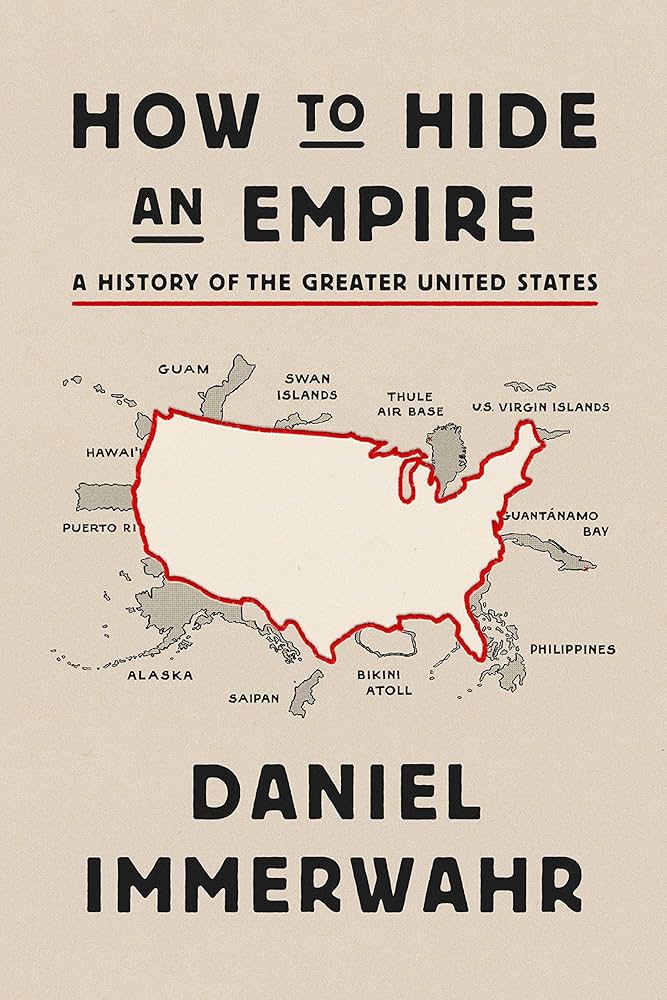
How to Hide an Empire by Daniel Immerwahr was a pretty good deep dive into the legacy of the United States as an imperial power (in the first half). In school, I, like others, never learned a thing about the U.S. colonies, such as the Philippines, Puerto Rico, or its many islands. Even Native American history was a blind spot. It dispels and dissects the legacies of American giants, such as Teddy Roosevelt, who was a war mongerer and loooooooved to provoke other nations into war so taht he could take their land. This book is relatively easy to read and a good entry point for those looking to learn about some of the darker elements about U.S. imperialism.
However, the second half of this book is all over the place (kind of like American empire, eh?). It devolves into little episodes of how American culture impacted other countries, which then return to the U.S. in other forms, such as Japanese products, British rock and roll, amongst others, which feel trivial after the first half and the little reflected upon reality of the U.S. domination across the globe. Little mention of the various coups orchestrated by the government, for example. The second half of this book is more slighting intriguing episodes of how the U.S. led the charge on, of all things, the shape of stop signs. Hey buddy, the Shah is dead, and we can talk about him.
Read the People’s History of the United States instead.
3/5